Post-war development
Please note that this text is an extract from a reference work written in 1990. As a result, some of the content may not reflect recent changes and events.
k) POST-WAR DEVELOPMENT:
The immediate post-war need was for housing and large estates were rapidly erected by the council at Bevendean, Coldean and Hollingbury. A little of the pre-war style lingered on into the 1950s, however, with buildings such as the Western Bathing Pavilion; Barclays Bank, North Street; and some of the factories on the Hollingbury and Moulsecoomb Way industrial estates.
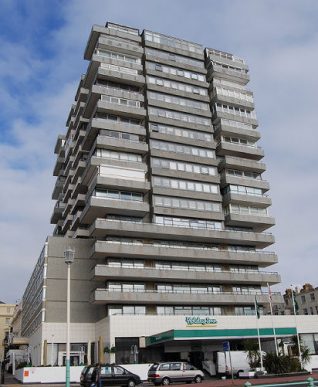
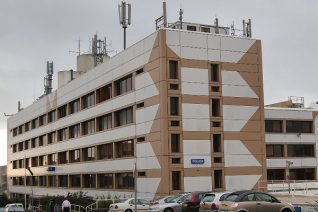
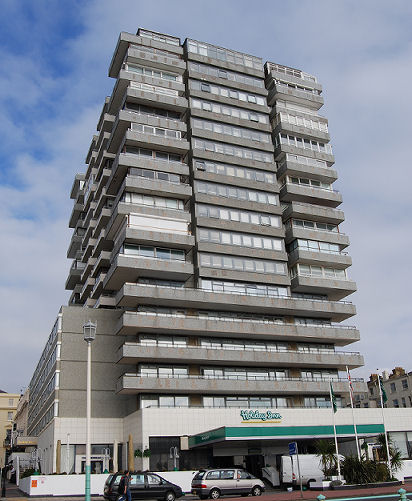
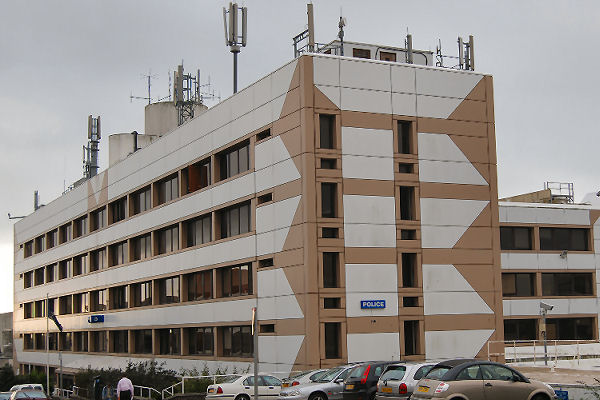
From the late 1950s until the early 1970s the townscape was radically changed by the widespread replacement of many small, terraced houses with numerous blocks of both high- and low-rise flats. The predominant use of concrete, the harshness of line, the brutal disregard for location, and the pure functionalism of designs in this period have resulted in many buildings which can only be described as ‘ugly’: within this category must fall the Albion Hill redevelopment; the Bedford Hotel; Churchill Square; the Law Courts, Edward Street; New England House; Osprey House, Sillwood Place; the Police Station, John Street; the eastern side of Queen’s Road; St James’s House, High Street; Sussex Heights; Sussex University; and Wellesley House, Waterloo Place.
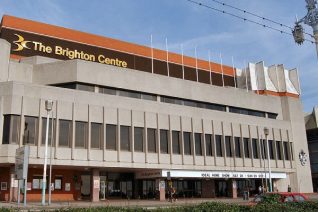
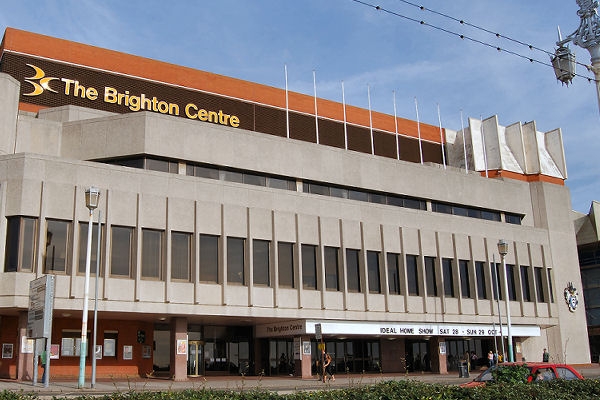
Other less objectionable buildings of the era include the Brighton Centre; Brighton Square; Church of Jesus Christ of Latter Day Saints, Coldean; Church of the Holy Cross, Woodingdean; Church of the Holy Nativity, Bevendean; Kingswest Boulevard; Polytechnic Art Faculty, Grand Parade; and the Spiritualist Church, Edward Street.


Comments about this page
I’m no fan at all of “style” as applied to human habitats (of all types and sizes) but the 1970s certainly ushered in some dreadful built environments. They seemed to have been designed to please the warped aesthetics of designers, builders and council members rather than to serve the social, economic and environmental needs of people and the heritage of Brighton. Copying trappings of “style” by slapping on surface decoration to otherwise poorly performing and poorly conceived buildings (as measured on many social, physical and economic dimensions), is as bad as the dreadful-looking structures illustrated on this page.
Yes Brighton has been mercilessly disfigured by shock waves of sheer ugliness and blandness, much of it towering above the town I used to know and love. In fact, I can’t think right now of any post-1965 development in Brighton that I find attractive. Churchill Square was the first hint of things to come. As for the ‘North Laine conservation area’. Do me a favour! And there’s more on the way folks! Lots of planning applications for huge ugly blocks to further disfigure our once-loved urban landscape. As one architect said to me ‘Beauty is in the eye of the beholder’ – how convenient!
Add a comment about this page