Principal publications
Please note that this text is an extract from a reference work written in 1990. As a result, some of the content may not reflect recent research, changes and events.
The principal local newspaper of Brighton and Sussex is the:
a) EVENING ARGUS: Originally known simply as The Argus, after the hundred-eyed, all-seeing giant of Greek mythology. The first edition sold for one halfpenny and was published on 30 March 1880 at 130 North Street, where a loft on the roof housed the pigeons that brought in stories from the far corners of the county. From 7 November 1889 an East Sussex edition was printed at Hastings, and on 1 January 1897 the newspaper was renamed the Evening Argus; a Morning Argus was also published from 2 September 1897 until 3 May 1926. The price was increased to one penny in March 1918, and in February 1926 the first photograph was included, of a fire at the Court Theatre in New Road. The printing works eventually moved to SpringGardens with type still set in North Street, but in 1926 Southern Publishing acquired Robinson’s printing works and adjoining premises at the southern end of Robert Street, enabling all departments to be housed in the same building.
The Evening Argus reached a crisis in the Second World War when circulation fell to just 19,000. The Hastings plant was closed, but after the war the paper was reorganised and re-equipped, and the circulation gradually rose again. The ‘magic’ figure of 100,000 copies per day was reached in October 1964, and total readership is now around 250,000. In 1972 paper type replaced hot metal, the first photo-set front page was produced on 28 October 1977, and in July 1987 the paper went completely ‘electronic’. In 1990 a £20 million newspaper printing investment at the Hollingbury industrial estate was announced, but the offices and journalists will remain in Robert Street . (See also “Southern Publishing Company” below.) {19,123}
Many newspapers and ‘visitors lists’ (which recorded the arrival of fashionable visitors) were published in Brighton in the nineteenth and early twentieth centuries. Many were short-lived, but the best known are detailed below.
b) BRIGHTON GAZETTE: A weekly paper, first published as the BrightonGazette, Sussex and General Advertiser or Worthing, Eastbourne and HastingsFashionable Chronicle on 22 February 1821 by E.H.Creasy, in premises beneath Donaldson’s Library at the corner of Old Steine and St James’s Street . The offices later moved to 168 North Street, and from 1835 it was printed in a building adjoining the Central National Schools in Church Street. From 1852 it was published at the Pavilion Dormitories behind North Street, but the Gazette was later acquired by the Southern Publishing Company. On 2 April 1938 it became the Brighton and Hove Gazette. The paper incorporated the Southern Weekly News from 19 November 1965, and continued as the Brightonand Hove Gazette and Herald in 1971, having incorporated the Herald. The last edition was published on 9 March 1985 when the Gazette was itself absorbed by the Brighton and Hove Leader, launched as a free weekly on 25 June 1981. (See also “Southern Publishing Company” below.) {6,19,24}
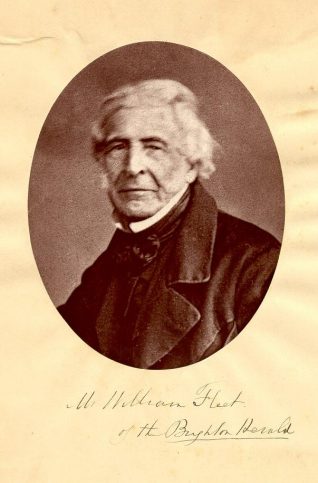
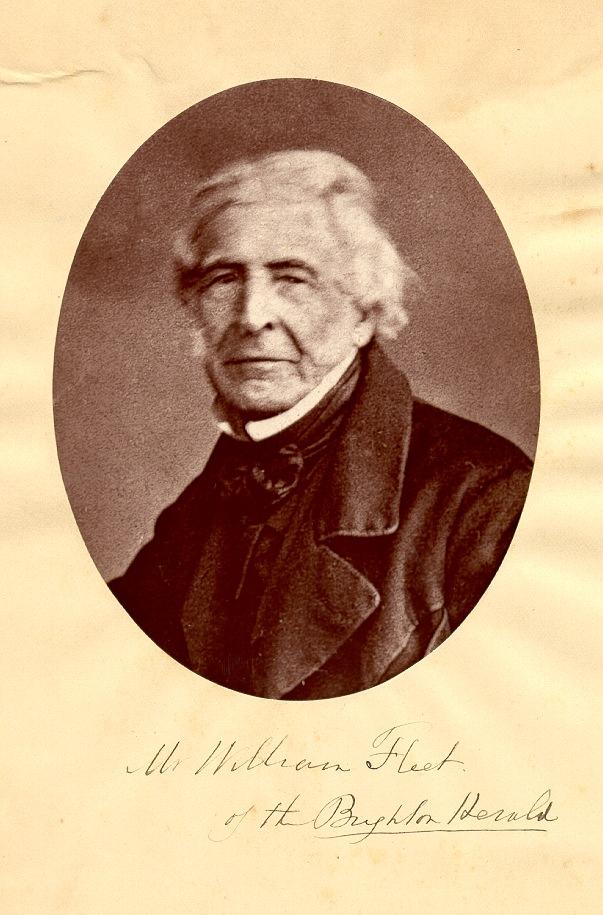
c) BRIGHTON HERALD: The first newspaper to become established in Brighton was first published on 6 September 1806 at 8 Middle Street by H.Robertson Attree and Matthew Philips, with Robert Sicklemore as editor. From May 1808 Attree carried on the business alone and the offices were moved to the top of North Street, but in January 1810 Attree took the manager William Fleet into partnership, and then left the business himself the following April. Fleet moved the Herald offices to Prince’s Place, and took his son Charles into partnership in 1843, retiring in 1864. Charles Fleet then took John Bishop, with the paper since 1839 and later to become a well-known local historian, into partnership, and left him as sole proprietor when he himself retired in June 1880.
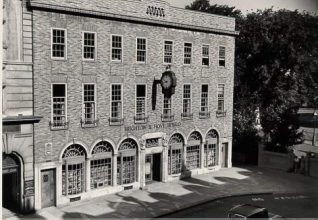
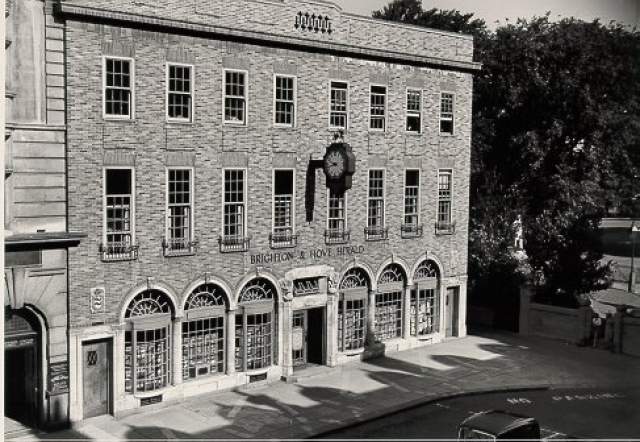
The Herald rapidly established itself as a leading provincial weekly, and was the first newspaper to report the escape of Napoleon from Elba in 1815, the start of the French Revolution of 1830, and the arrival of Louis Phillipe at Newhaven in 1848. In 1934 an elegant new office building was opened on the western side of Pavilion Buildings; it was decorated with the arms of Brighton and Hove and is now occupied by the Royal Insurance Company. The name of the paper changed to the Brighton Herald and HoveChronicle on 19 July 1902, and to the Brighton and Hove Herald on 4 November 1922. The final edition, no.8621 after 165 years, was produced on 30 September 1971 when the Herald was absorbed by the Brighton and HoveGazette. {6,15,24}
d) BRIGHTON STANDARD AND FASHIONABLE VISITORS LIST: Published on Tuesdays, Thursdays and Saturdays, the Standard first appeared on 4 July 1865 as the Brighton Fashionable Visitors List and changed its name on 7 May 1878. It continued until 4 March 1953, a total of 13,249 editions. (See also “Southern Publishing Company” below.)
Any numerical cross-references in the text above refer to resources in the Sources and Bibliography section of the Encyclopaedia of Brighton by Tim Carder.
The following resource(s) is quoted as a general source for the information above: {83,123,301}


Comments about this page
I well remember both The Evening Argus and The Brighton and Hove Gazette when growing up in Hove in the 50s. After tea my dad would settle down with The Argus and a cuppa and The Gazette was part of our Saturday mornings while listening to Breakfast with Braden – I’d forgotten all about that until reading this article, so thanks for the memories.
I worked very briefly for the Southern Publishing Company at the top of North St. 1939-1940. It was a real Dickensian environment.
I worked in an offce with a Mr. Knight. I could not have the gas fire on until he arrived about an hour after me, and he turned it off when he left about an hour before me.
Haven’t seen any mention of The Sussex Daily News which I believe was also published by the SPC.
As a pensioner of 73 years old and living in Spain, I wondered if there are records kept of the Brighton & Hove Gazette, for the years 1948/1949? The reason I ask, is that there was a photo published in this paper of my local school football team, Hove Secondary School for Boys, otherwise known as The Knoll School. The reason I ask, is that I am coming to Brighton this summer, and would like to peruse any records relevant to this, and if possible purchase a copy of our team.
[Editor: Alfred – suggest you visit the Brighton Museum when you’re here as I believe they have copies of old newspapers.]
I have a cutting from the Brighton Herald relating to my winning the Stevenson & Clarke and Brighton Herald Cup for rifle shooting in the 60’s. I was in the T.A. then, I had a score of 166 out of a possible 170. The heading was Sussex Services’ Champion. Is this cup still in existance and has my score been beaten?
The father of my grandmother worked as a chief reporter in Brighton & Hove Gazette in 1895, I would like to find some information about him, can you help me?
My Grandfather’s butchers was featured in the B&H Gazette on Dec 24th 1971. Les Leeson was his name and the photo was taken back in 1934. My copy of the photo is not too clear. It would be lovely to get another one. The shop at 33 Gardner St is now a shoe shop.
I was sent to the Brighton & Hove Girls’ Orphanage in 1951, I was 18 months old. Apparantly my father was in prison for leaving me alone in a room for two days; my mother was in service. My father’s name was Juray Olenski – anglisised to George Olen. If this went to court it must have been reported in your paper – I would like to access the archives
My Great great grandfather was a leader of a church in 1897. Publications in this newspaper. Can you help
I served an apprenticeship from 1952 to 1959 as a compositor (hot-metal, no computers) at those offices in Pavilion Buildings. In the machine room below ground, which also housed the Rotary Press upon which the Herald and Standard were printed, was a concrete saferoom containing huge leather bound archives of (I believe) every copy ever printed. I left the firm in 1959 eventually returning to Hove starting my own one man printing business. In the 70s, I bought some odd items when the Herald decided to give up commercial printing. The entire business closed soon after, an ignoble end to a glorious era. But what could have happened to all those archives?
In August 1952 while still a school girl at Sacred Heart Covent in Hove I was crowned Miss Hangleton. My picture appeared in Brighton and Hove Herald and the Argos much to the nuns’ surprise! I wonder if there are any pictures of me still in the archives? Sarah Hatton (known as Maureen Gittins then)
Further to my comment above regarding the archives, after quite a lot of searching have found that they are all on microfiche at Brighton Reference Library in Jubilee Street! I think those leather bound volumes were donated by Mr Harold King, the last MD of Brighton Herald Ltd.
Thank you for this information. I have been wanting to access the archives for a while to look for information about my grandfather Quinto Barontini who ran Jimmy’s Restaurant in Steine Street up to WW11 – not sure if he returned after the war or not. It was a very successful restaurant and must have been due to his hard work and that of his team.
The Wetherspoons in North Street is named The Post and Telegraph. It claims that two Brighton newspapers were produced at the address. Where have they got that notion from?
As Brian Hatley, I too served my apprenticeship at The Herald as a compositor at the same time and remember the MD to be Mr Tester, with managers Mr Osborne and Jack Dean, and Peter Saunders in the art studio with Marion Oram. Harry Waller was my overseer, with dear Mr Wix as stone hand (usually seen with a half eaten sandwich stuck in his mouth) and Mr Bean, composing room foreman, who used to tap his snuff box, a ritual for everyone to share each day.
I too was an apprentice at The Herald from late 1957 to 63 in the press room and remember both you Tony and Brian and also Alec Croydon, Mick Taylor, Reg Ebeling, Jack Mason and many more. They were mostly happy days, alas all gone now.
Hi Terry, thanks for your comments, they have helped to jog my memories again re more of our colleagues of that time! I remember you, I believe operating one of the Heidelberg printers and also the massive Hoe Rotary press machine that used to get flooded at times. As you say long gone now but very fond memories of our time there. Many Regards to all
Wetherspoons claim that their pub in North Street, the Post and Telegraph, is named after two former Brighton newspapers. Where on earth did they get their information from? I have asked them but have heard nothing.
My father, Bert Davey, worked at Robert Street for the Argus for many years – he died in 1968 and a few days later the Argus printed a few lines in the paper about him. Is it possible to get a copy of this paper? Not sure of the date.
Hi David Wilkinson, noticed your references (twice) to Wetherspoon’s claim that their pub is somehow connected with two newspapers produced on their premises. You will see in the history (above) that North Street is mentioned several times from about 1880, so they may well have a point. I can’t imagine that newspapers were ever actually printed there (of course, I simply don’t know) but it’s certain that pre-press work would have emanated from the address. As recently as the 1980s, the Argus had an office front there, where one could place classified ads and buy the latest edition. No doubt they owned a long lease dating back to 1880 or even the freehold before it became a pub?
I worked at what was the Southern Publishing Company, who published the Argus from 1959 until 2004, with a few years break to have my children. I worked both for the general printing division, the Leader, advertising department and finally editorial. I have many great memories of my time there. Also my father, Jack Mason, worked in the press room at the Brighton and Hove Herald from 1936 until the late 1960s.
Good to see those names from Brighton & Hove Herald days: Terry Etherton, Alec Croydon, Reg Ebeling, and Frank Mason, not forgetting Ted Woodward, Ted Trott and a few others, all from the machine room (below stairs!). Mick Taylor worked in the Regent Street poster department, one of three employees there. Tony Stevens was in the Composing Room (as was I). By the way Tony, it was Wickes not Wix! You are right though about Charles H. Tester being the last MD, he became MD after I’d left, having given long service as overall Works Manager with Bill Gunn as his deputy. Harold King presented me with my indentures when I was “banged out” in 1959. I joined Ditchling Press in 1960, and the first employees I encountered were Les Bean, son of Dick Bean (the snuff-taker), Frank Walford (from the Monotype Caster room) and Frank Croydon, son of Alec Croydon. Those were the days when you could easily change your job if you felt like a change, indeed the local rag (Evening Argus!) always carried whole pages of vacancies. I think the “Herald” was so important, situated in what was such a prominent and historic position, that it ought to have a page of its own. Are there any other ex-employees with memories and/or pictures from the 50’s and 60’s?
My Dad Arthur Bryant worked at the Argus for 44 years in the Foundry. My Wife Margaret also worked on the switchboard for a few years and my Brothers and uncles also worked there.
Hi Brian, thanks for putting me right on Mr Wickes’ correct surname, you are well on the ball with an amazing memory! Was great to read your comments on all friends and colleagues from those wonderful days which will never be forgotten. I am so glad to still have you to contact as well and often wonder if you still pursue your piano playing. Do you remember Marion Oram as well as Peter Saunders who I joined in the Studio, she named her son Dick as in dicorum – a great couple and would hope she is still alive where sadly Peter died a long time ago. He will always remain as the greatest inspiration to my previously troubled life, giving me the confidence enabling forward to what is a great experience to this day.
A long shot – are there any archives of the staff employed at the Sussex Advertiser in the 1840s and ’50s? I am researching a John Lee Creak (born 1823) who I believe trained as a compositor at this time. His parents ran the Baths in Brighton. He had connections with the newspaper Baxter family in Lewes and he appears in Australia in 1853 as a fully fledged compositor. Any info regarding apprenticeships etc would be most interesting. [Hello Angela, if you are Brighton/Sussex based, you could visit The Keep near Falmer: www.thekeep.info. It’s where something like 900 years of East Sussex archives are stored! Helpfully, there are archivists at hand to assist with your search. Best wishes, the Editing Team]
I’m very interested in the memories of the people who worked at the Brighton Gazette in the 1950s and 1960s in Pavilion Buildings. I’m doing some research on this. Would anyone be kind enough to answer some questions on this subject? Many thanks!
Jonathan, the Brighton & Hove Gazette was a Southern Publishing newspaper, printed at Robert Street along with the Argus. It never lived (AFAIK) at Pavilion Buildings, the home of the illustrious Brighton Herald (published Saturdays) and Brighton Standard (published on a Wednesday). The Standard was a tabloid, as against the broadsheet Herald, and in the days when apprentices had to attend a whole day at the College of Art in Grand Parade, I would nip in early to grab a few free copies, before proudly giving them away in my classroom! I remember the teacher (Eric Gee) joking “hot off the press, eh?”. Which of course, they were.
Brian, thanks for the correction, I actually meant the Herald, my mistake. Would you mind answering some questions about what it was like inside the building at Pavilion Buildings and the general operation of the newspaper, how many employees there were, types of job role etc? I just wonder how it differed from the Argus etc, was it more a serious news paper by the 60s than the Argus was? What sort of stories were covered?
Many thanks again for sharing your memories.
To David Wilkinson (08/11/2014). Hi David. Wetherspoon’s claim is that, published by William James Towner, the Gazette’s full title was the “Brighton Gazette, Hove Post and Sussex Telegraph”.
I would think that could be verified by looking at front pages of the copies of relevant issues at The Keep in Falmer.
Regards, Alan Hobden.
Does anyone remember the Regent Street work shop with the bindery, Heidelberg platens and Process Engraving departments? It’s still there pretty much unchanged, Crittal window frames included. I was apprenticed (by Mr Tester) for five years as a camera operator in the ‘process’ department. My journeymen were Arthur Cleveland and Steve Higgins. ‘Cliff’ North was the manager with Ernie Carter, Norman ? , and Reg ? the ‘tone’ etchers plus apprentice Clive Hilton. Tommy Farmer was the lone line etcher, usually red with caked in Dragons Blood (an acid resist). Harry Bradley was the hand engraver and Brian the ‘router mounter’ whilst the proofer’s name escapes me at the moment. I managed to force the management’s hand into allowing me to attend the London College of Printing’s City and Guilds course once a week for two or three years. Apprentices were more or less used as slave labour in those days what with the tea making and shopping duties. I also had endless glass plate cleaning for the cameras as we still used the ‘Wet Collodion’ photographic process then, film being considered far too early in its development. As I recall it (please correct me if you know better) I had to clock in thirty minutes earlier than the men to give me time to ‘air’ the department of all the noxious fumes from the various acid and and chemical baths, sweep the floors, get the tea on and scrub clean and coat about twenty glass plates ready for them to arrive, change into working attire, roll a fag, discuss the ‘Albion’, last nights telly, the news or some other domestic nonsense before taking a slug of my brewed tea with usually a grumble in my direction that it was ; too strong/weak, hot/cold, milky/lacking milk but not with those words. Many happy / troubled / rebellious times. Well, it was the Rock n Roll era, Whiskeyagogo, Girls and alcohol. I recall Mr Gunn (and his son a fellow apprentice) as a really kind general manager and one lumbered with the job of quite rightly sacking me when I had completed my apprenticeship. My time keeping, never good, had steadily deteriorated during my last bolshy year and I was finally instructed that if I couldn’t arrive within three minutes of the appointed time, not to come in at all. That was all I needed to go down to a two day week. Happy days. So many memories but I’m sure nobody’s left awake by now with this old man’s rantings.
Well, here is one who has not dropped off reading the above posts. I have only just discovered them. I am John Colban and I started my apprenticeship at the Brighton Herald in 1950 and became a Linotype operator. I remember many of the names mentioned in earlier posts, including Brian Hatley, who lent me his BSA Bantam to pass my motor-cycle driving test in Hove, and Alan Caffyn, the next boy to be apprenticed after me before Brian. Charlie Tester and Bill Gunn are remembered, of course, and John Cecil, George Horrobin, Bob Wood, Jack Pelling (night-shift), Barry Widdowson, Derek Stenning and Harry Warner among the Linotype operators. Stan Beckley on the dump. Among the comps were Bert Shears (another snuff taker), Maurice Jenner, George Beard and Mr Phillips (Clerk of the Chapel). The tea-maker and general dogsbody was Charlie Scarfield and “Tiny”, who they said was too heavy to be weighed on a normal scale (21 stone) operated the baler. Among the comps in the jobbing department while I was there were Dicky Bean, Harry Waller, Harry Martin, Pat Ford, Bill Mazlin, Peter Hunt and apprentice Tony Russell. On the Monotype keyboards were Frank Maxfield, who doubled as a comp sometimes, and Mr Howse. Jerry Chatfield (Father of the Chapel) was the Monotype caster operator. In the machine room the only name I remember is the big Jack Mason. Ted Trott was also downstairs near the bottom of the lift but I can’t remember what his job was. Then the Datsun brothers arrived. One was the driver but I can’t recall what the other one did. In the offices upstairs was the managing director, Mr Curtis-Wilson, who was blind, and his private secretary, Mr Dawes, who got a stretch inside for presenting Mr Curtis-Wilson with blank cheques to sign. Next down the ladder was Mr King, and then there was Jack Deal and Jack Osborne. At the Process Department in Regent Street I remember Reg, but not his surname. He used to send naughty verbal messages, which I didn’t understand, through me to one of the girls in the front office, which made them giggle. Mr North I remember, not well, and Tommy Farmer and his Dragon’s Blood very well. I have written some (not too serious) “memoirs” and the second chapter is devoted almost entirely to my apprenticeship years at the Herald and includes about a dozen (not particularly good quality) pictures of some of the characters mentioned above who I worked with. If anyone is interested in reading these recollections, which include an account of the drunken Chapel outing to Henley and Maidenhead, they are welcome to contact me at colban@webafrica.org.za
I have just stumbled upon this interesting site. I recently wrote my (not too serious) “memoirs”, and the second chapter is almost entirely devoted to my apprenticeship days at the Brighton and Hove Herald, from 1950 to 1956, and I remember many of the characters mentioned in the preceding posts.
To Jonathan Owen I would say that the Southern Publishing Company who published the Evening Argus, the Brighton Gazette and the Sussex Daily News in the 1950s was a much larger company than the Brighton Herald and must have employed at least three times as many journeymen. I did go in there a couple of times to visit chaps who had gone there when the Herald closed down. John Cecil and Pat Ford were two I remember.
Apprentices already employed at the Herald when I arrived included Pat Ford and Tony Russell, and those who followed me included Alan Caffyn, Brian Hatley, who lent me his BSA Bantam to take my motor-cycle test in Hove when my bike broke down, and Jeff Donaldson. I became a Linotype operator and remember the operators during my time there as George Horrobin, Bob Wood, Harry Warner, John Cecil, Derek Stenning, Barry Widdowson and Jack Pelling (nights). The comps in the newsroom were Mr Phillips (Clerk of the Chapel), George Beard, Bert Shears and Maurice Jenner with Stan Beckley on the dump. The works manager was the unsmiling Charlie Tester who stood and glared out of his office on to the Linotype dept. floor, coughing much of the time. I was told he had been gassed during the war so he probably had little to smile about. He nonetheless smoked almost 40 cigarettes a day (I know because I had to buy them for him). Bill Gunn was Mr. Tester’s amiable deputy and sat at a desk beside him.
In the jobbing comp room were Dicky Bean (the foreman and snuff taker), Harry Waller, Harry Martin, Peter Hunt, Bill Mazlin, Pat Ford, Tony Russell and Frank Maxfield, who doubled as a Monotype keyboard operator alongside Mr Howse. Jerry Chatfield (Father of the Chapel) was the Monotype caster attendant.
Charlie Scarfield was the tea-maker and general dogsbody, accompanied by “Tiny”, who they said was too heavy to be weighed on a normal (21 stone) scale, who operated the baler. In the basement near the Hoe and Crabtree rotary press was Ted Trott (I don’t remember his job) and burly Jack Mason in the foundry, who I was sent to for a “long weight” to push up against type to stop it falling over (pieing) and got a “long wait” instead. Alec Croydon I also remember. The Datsun brothers arrived while I was at the Herald. One of them was the driver of the Herald van but I can’t remember what the other one did.
In the offices were, on the top floor, the Managing Director, Mr Curtis-Wilson, who was driven to the Herald in his Humber Super Snipe by private secretary Mr Dawes. Mr Curtis-Wilson was blind and Mr Dawes got a stretch inside for presenting him with blank cheques to sign. Also among the office staff I remember were Mr King, Jack Deal and Jack Osborne. The Herald artist was Peter Saunders and the photographer was a tell man with a moustache named John.
In the Process Department at Regent Street I remember Mr North, Tommy Farmer and his Dragon’s Blood and a chap named Reg who used to send naughty verbal messages through me to one of the girls in the front office. In my innocence, just out of school, I didn’t understand the content of some of these messages. The girls made out they didn’t either but I know they did by the way they giggled.
In my “memoirs” there are about a dozen (not good quality) photos that I took from time to time, including some taken at my first drunken Chapel outing to Maidenhead and Henley. There is a picture of the comps on the Herald roof outside the jobbing department (including Dicky Bean, Bert Shears, Frank Maxfield, Tony Russell, Pat Ford, Harry Waller and Harry Martin). Other pictures include Peter Hunt, John Cecil, George Horrobin, Jack Mason, Jack Pelling and others.
Brian Hatley asks if anyone has pictures of those days. I have quite a few and am happy to send them. If anyone is interested to read my chapter about the Herald I am more than happy to send it on (and any more chapters if anyone’s interested). Don’t get the wrong idea – these “memoirs” are not in a published book but are only the memories of an ordinary man who has nothing much to do these days but live in the past. They are only amateur scribblings that maybe one day our kids and grandchildren may actually get around to reading.
My email address is colban@webafrica.org.za. if anyone is interested.
To Jonathan Owen (24/03/17) Only just seen your comment requesting info on the Brighton Herald. Happy to oblige as far as I’m able, as I’m sure several others will be. I can be contacted by email [Brian, your email won’t automatically appear in your posting. If you wish it to be available for use you will just need to add it to another posting. Thank you, Editing Team]
Looks like this thread has stopped now ?? Any more from any old BH Heralda’s ?
Add a comment about this page