Once known as Spring Street

Please note that this text is an extract from a reference work written in 1990. As a result, some of the content may not reflect recent research, changes and events.
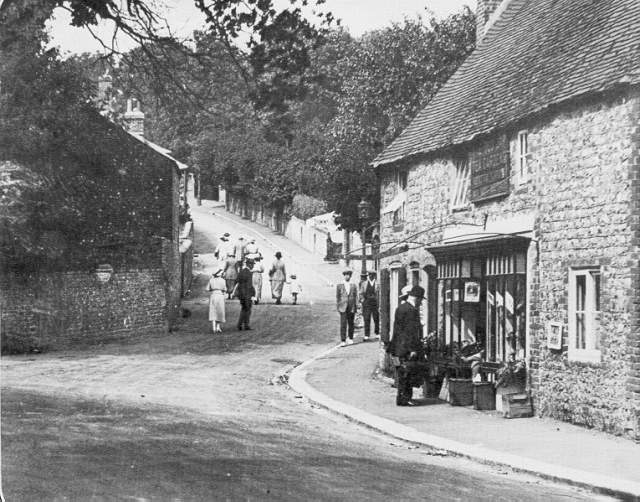
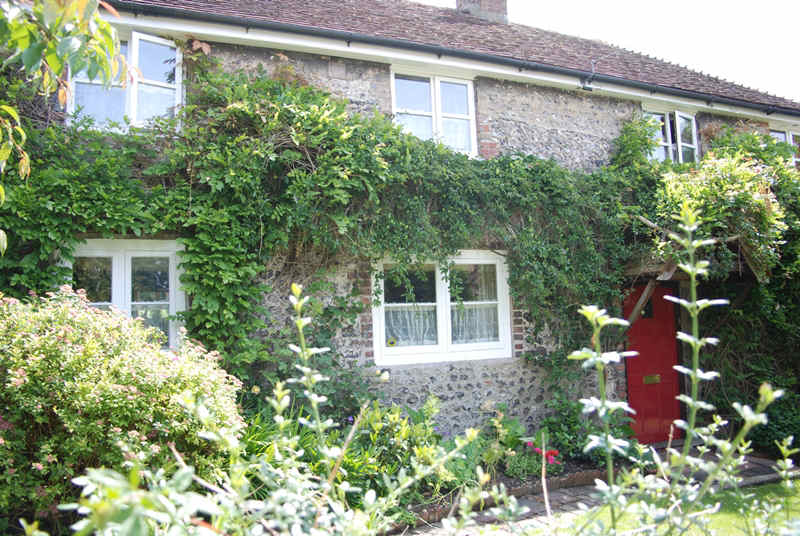
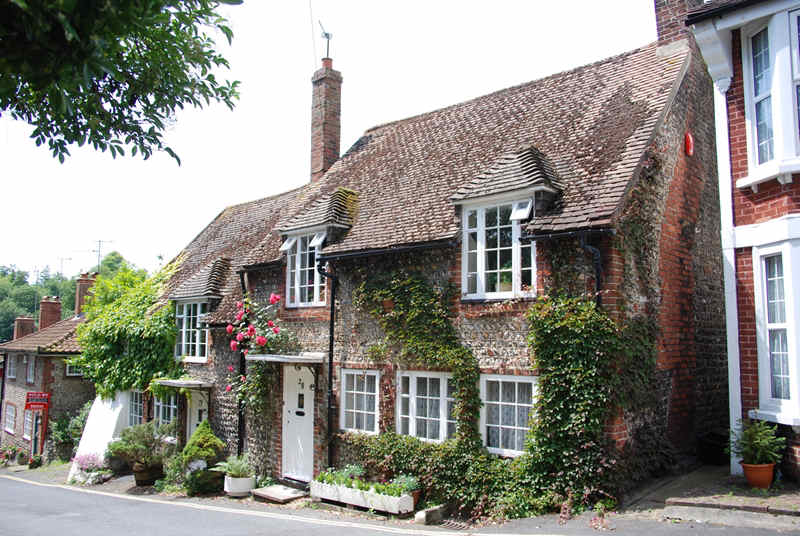
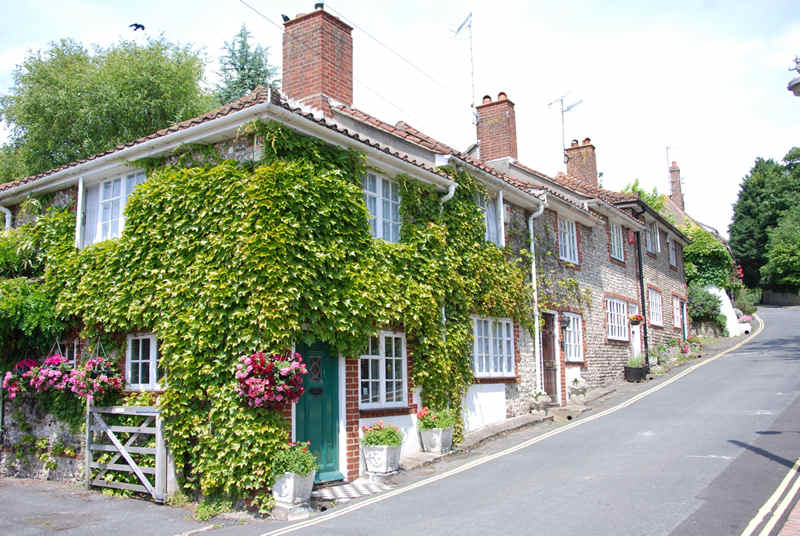
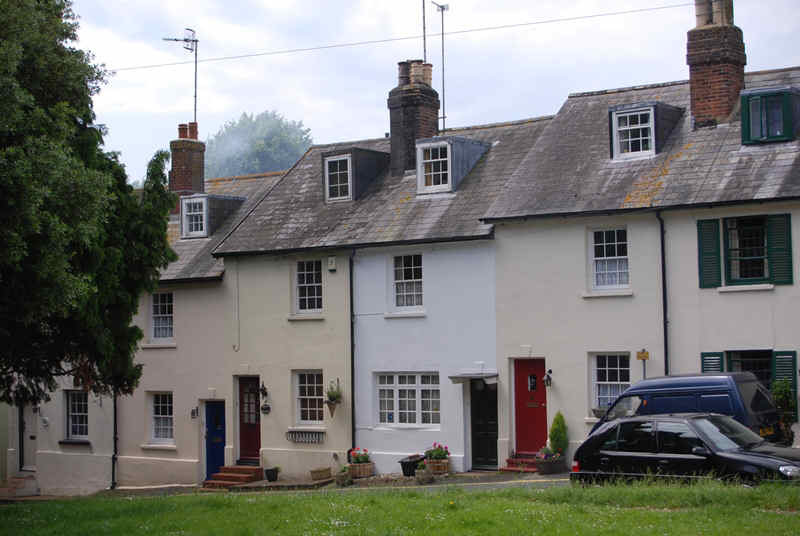
c) CHURCH HILL : The shallow depression in front of the church marks the site of a pond, one of the principal sources of the stream known as the Wellesbourne (q.v.) which ran all the way to the sea at Pool Valley . Nos.13-25 Church Hill opposite are known as Pond Cottages, plain, slate-roofed houses from the first half of the nineteenth century which were restored jointly by the corporation and the Patcham Preservation Society in about 1964. Nos.28-29, two flint cottages (originally four) on a timber frame, were probably refaced in the eighteenth century, while nos.33-36 are early-nineteenth-century flint cottages with red-brick dressings. No.10 on the eastern side, half covered by creeper, has an eighteenth-century front of knapped flint on an older timber frame. All these old cottages are listed buildings.
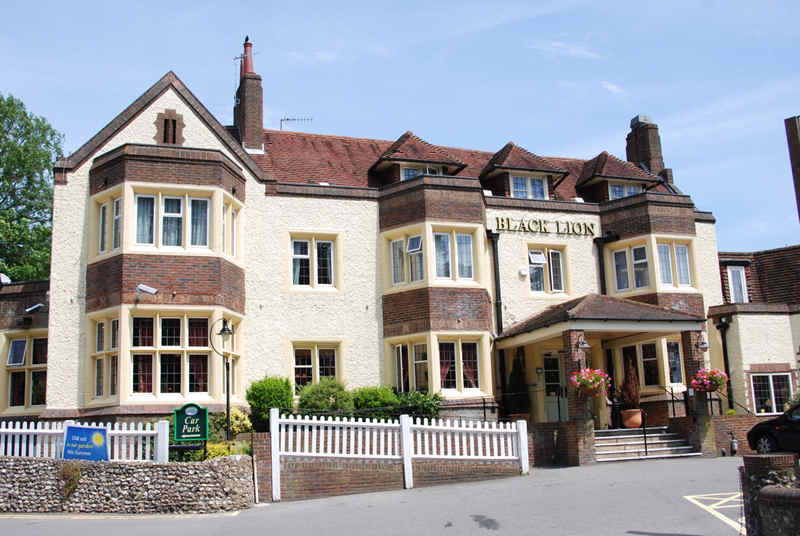
The large Black Lion Hotel opened in 1929. The inn originally stood at nos.110-112 Old London Road , but with the opening of the Patcham bypass in 1926 it became prudent to build a new hotel on the site of an old house by the main road.
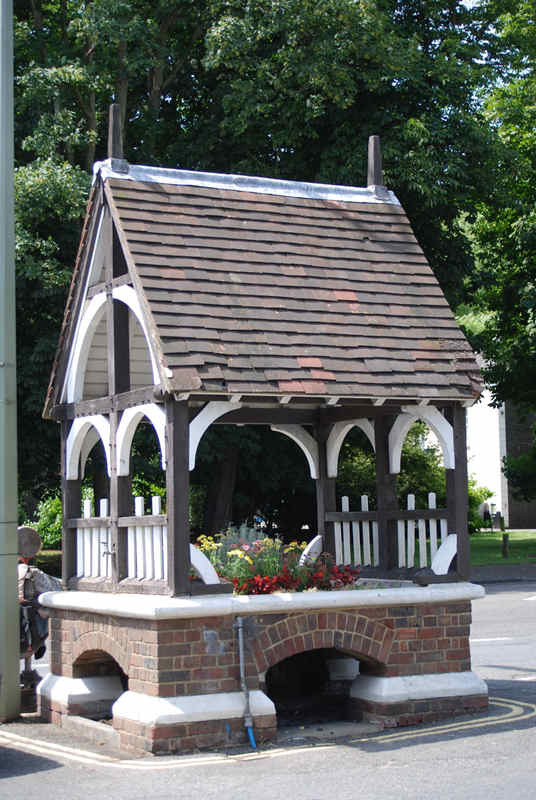
The lowest part of Church Hill , together with part of Old London Road , was once known as Spring Street and was often flooded by the Wellesbourne in winter. Here nos.4-4a are eighteenth-century listed flint cottages, but the adjacent no.5, also listed, has been shown to date from the fifteenth century and is one of the oldest buildings in the whole borough. Patcham Fountain was erected in 1887 to commemorate the golden jubilee of Queen Victoria on the site of a donkey wheel which had supplied the village with water; the present structure is a replacement of the original which was demolished by a bus. {44,123,127a,128}
Any numerical cross-references in the text above refer to resources in the Sources and Bibliography section of the Encyclopaedia of Brighton by Tim Carder.


Comments about this page
I was told as a boy that the top of the fountain was exactly the same height above sea level as the top of St Peter’s Church in Brighton. Anyone can confirm this?
I am sure there used to be a little toy shop here mostly second-hand toys and for a little pocket money you could fill your boots with old dinky toys and the like, this was a lovely area and so peaceful 40/50 years ago
This is probably taken from the flint wall adjoining All Saints Cemetary where my parents are buried. During WWll this grass area had an Emergency Water Supply (EWS) tank or pond on it which was obviously restored after the war. Out of sight to the right was a farm with tithe barn (one of the longest in the UK) which has been converted into rather posh housing. Opposite but to the right is the flint dovecote, another listed building.
My mum lived in Church Lane. She had two brothers and three sisters. Her Maiden name was Baker. My dad helped build the Black Lion pub, that’s where they met. My mum died about 13 years ago aged 91. I am 75 but still get down to Brighton when I can.
Does anyone know what happened to numbers 29 to 32 Church Hill? Nobody seems to know.
The windows were different in a 1906 photograph that’s in Patcham library. These are wider and more like an illustration for ‘Quality Street’ chocolates. Does anyone know when they were changed and who did them? There are other examples in Old London Road and Chuch Hill, all different.
My Gran Maude Clifford lived in the cottage part of which was partly in the Black Lion car park. The cottage had a inglenook fireplace we could sit in and look up the chimney and see the stars and it had a section on the chimney you could smoke food on. There were five sons Bert, Jack, Ron and Alf Bern- two daughters, Maude who became my mother and Rose. Ron worked on the farm at the top of Church Hill, Jack worked in the Lime works at the bottom of Dale Hill by the farm. When my grandfather came home from the first world war his job was the village postman and when he died he was taken up Church Hill on a gun carriage and buried at All Saints church. I thought the cottage was a listed building but it was pulled down to make the Black Lion car park bigger.
Did there used to be a sweet shop on the left hand side of Church Road in the late 40s when facing up the hill? I remember going there with a Toc H girl who was staying with my family when I was 11 years old in 1949.
The 10 year old girl came from Essex and it was her Aunt that owned the shop. Toc H placed the girl with us for two weeks in the Summer of that year, at that time we were living in Sussex Square.
Does anyone remember the Pullens of Church Hill? My great great grandfather Peter Pullen and his wife Harriet moved to the area in the late nineteenth century and they had 14 children in total including two from his first wife who died. Various family members lived in many of the houses in Church Hill over the years and my Grandparents lived in my Great Grandfather’s house at the top end of the row when my Dad was born. I don’t know what happened to any of the other 13 children (my Great Grandad’s siblings) and my Grandad was an only child.
In answer to Joe’s comment, I remember the name Pullen but not much more. My grandparents lived first at number 21 then at number 20 Church Hill (early 1930s onwards), my grandmother lived at number 20 until she died in 1990 and I remember visiting her as a child. Their surname was Clapson and my grandmother’s maiden name was Penfold (one of the many based around Church Hill/Court Farm). The Pullens and Clapsons/Penfolds would have almost certainly known each other.
Thanks Jeanette. My grandfather’s maternal grandfather was George Maskell from Patcham. He was born in 1865 and was the verger at the church for 52 years. Apparently he attended the village school from age 3-7 before going to work at Court Farm in the brewhouse. He later worked as an under gardener at Stanmer Park, where he met his wife who was a “skivvy” there.
Hi Joe, just read your comment re The Pullens . My father, Roy Still who is 92 was great mates with Peter Pullen, your Grandfather. They went to school together and played football and he tells me your grandfather was a train driver. Harriet who was one of the 14 siblings married my grandfather Wilfred Still in about 1939, both of them had been previously widowed. George who lived at number 13 Church Hill was also one of the siblings who would have been your Great Grandfather. I remember visiting him when I was a child. Harriet lived with my Grandfather Wilfred Still at 2 Church Hill until she died in August/September 1964. Wilfred died a few years earlier about 1961. Harriet had two children, Peter and Norah, both have since died. My Godfather (Ted Knight) was a grandchild of Peter and Harriet Pullen (one of the 14 ) but unfortunately he has died. My Dad’s paternal side have lived in Church Hill dating back to the 1600s.
I have photographs of the fountain being re-built after the demolition by the bus,my father in law built it in his joinery works then erected it on site.
Add a comment about this page