CVA, Post WWII Development

WWII
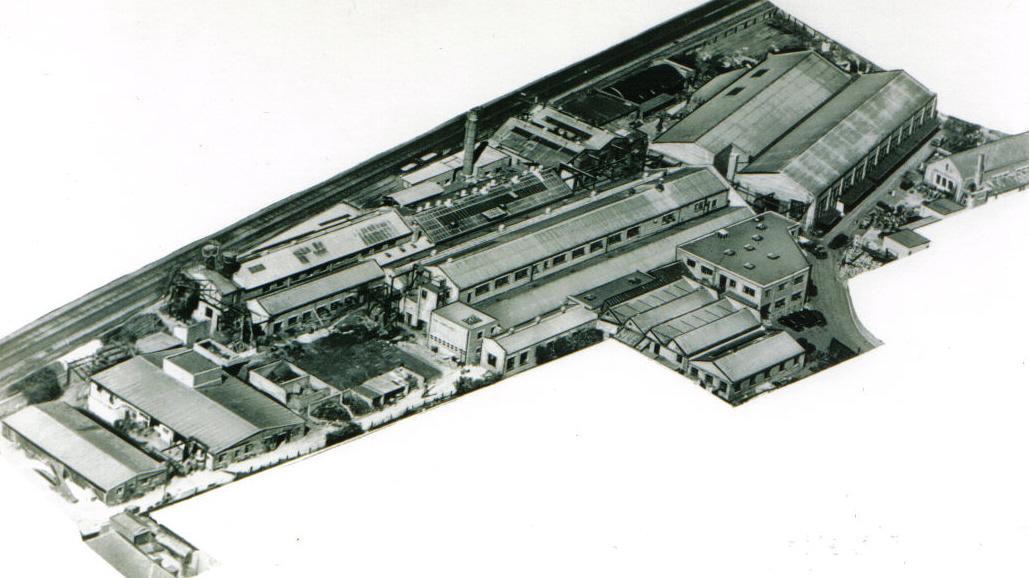
During WWII CVA’s manufacturing facilities and expertise were put to use for the war effort. At least one of the Portland Road buildings was used as a Munitions Shop. Because of the importance of its war work, the Company expanded during this period opening two other factories in the Brighton area. Following the war, CVA was in a good position for further expansion. It was one of the biggest manufacturing employers in the area, and further development was planned.
Modest facilities
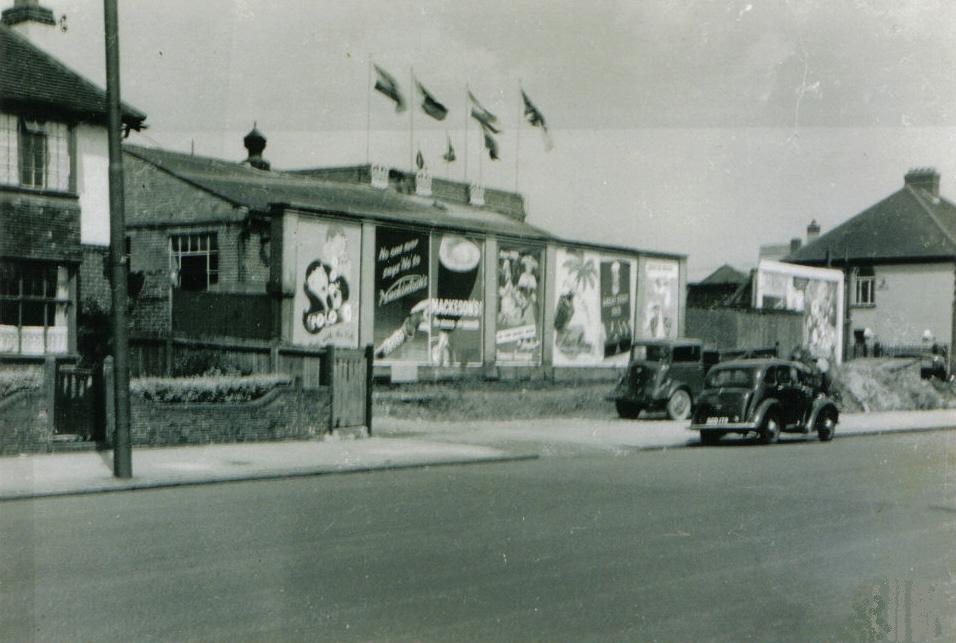
CVA had modest office facilities, with limited frontage onto Portland Road. Whilst the Portland Road site covered some 200,000 sq ft, the frontage onto Portland Road was a mere 200 feet of shabby advertising hoardings. At this time CVA’s customers were national and international manufacturing companies, and CVA needed to portray a certain image. By the early 1950’s the plan was to put that anomaly right, by the building of prestigious new offices, which would give CVA the image of a global player.
1953
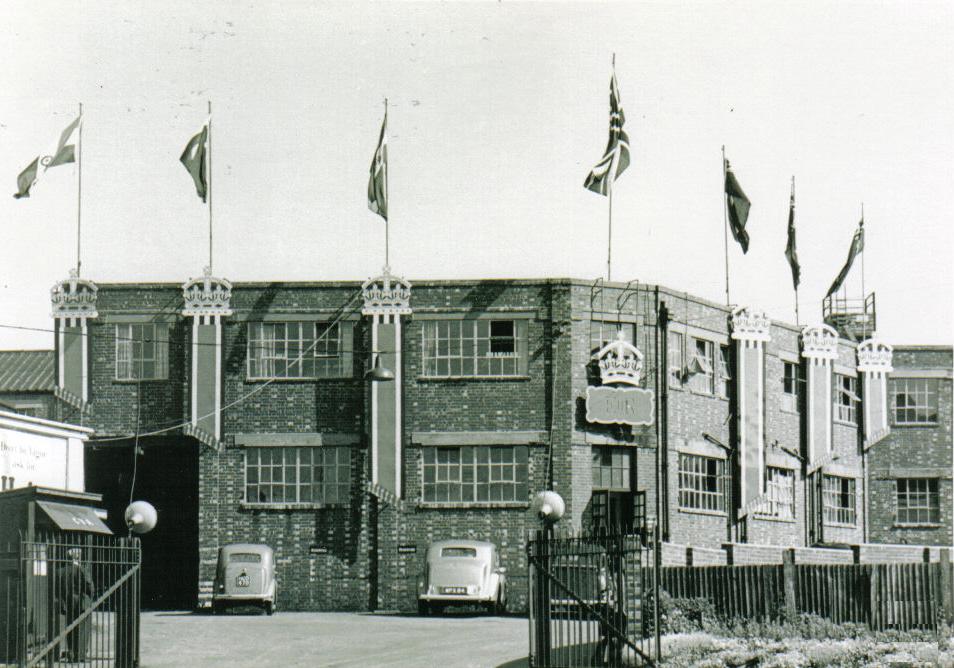
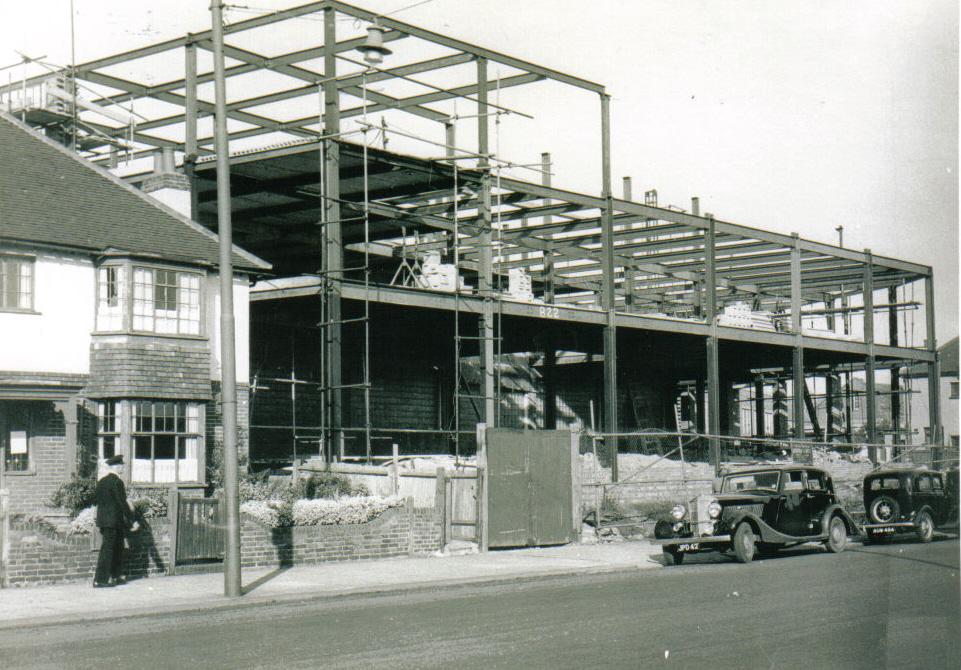
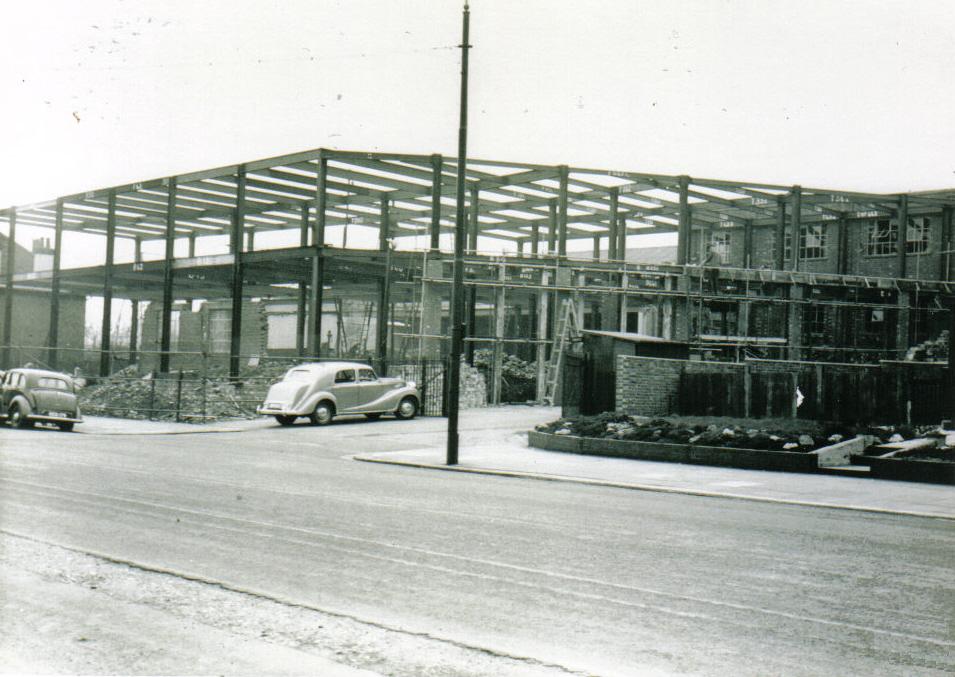
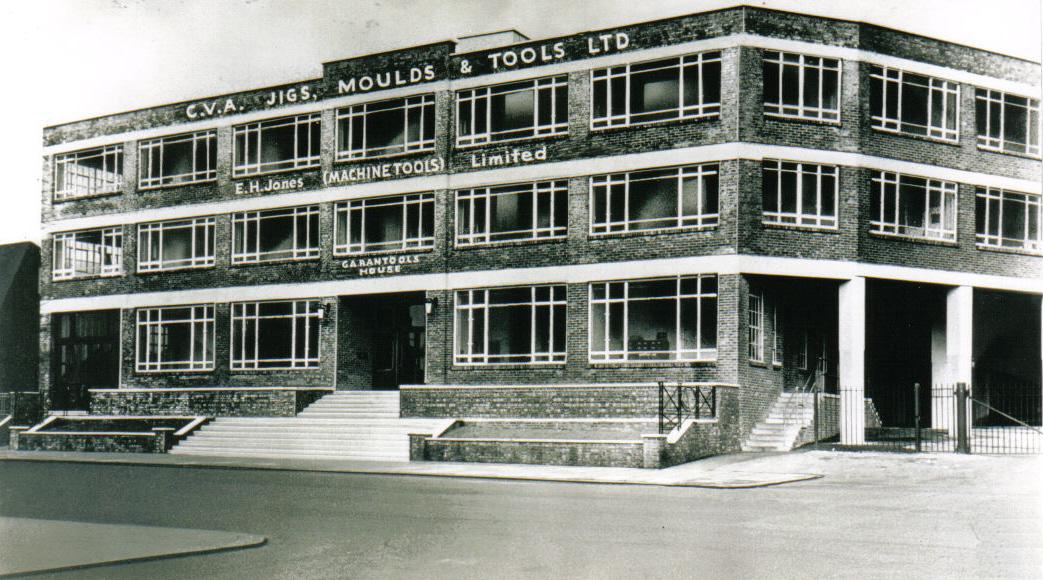
In 1953 the Company’s plans included demolition of the old workshop behind the advertising hoardings and the building of new offices with grand frontage onto Portland Road. What was unusual was that the Company themselves were to be the main contractor for the development. This was only possible because of the large Works Department. An example of this was that all the bricklaying was to be carried out by the Company’s own bricklayers, one of the many and varied skills of the large team of maintenance craftsman in the Works Department. Construction of the 3-story building started soon after the Coronation celebrations of June 2nd 1953. The size of the new building overshadowed the older “D Block,” building behind.
Glebe Villas
The “Works Entrance” was directly opposite the top of Glebe Villas, with the impressive main entrance from Portland Road to the newly completed office block ‘Garantools House’ slightly to the west. E.H. Jones Limited was the sales company set up by CVA to sell their machines.
Kearney & Trecker Corporation
The Company had ties since the forties with the U.S. Machine Tool manufacturer Kearney & Trecker Corporation of Milwaukee, Wisconsin. This was one of many reasons why the Portland Road site would not prosper for much longer! Kearney & Trecker manufactured very large machines, and by the late 1950’s these U.S. machines were to be built by CVA. The Portland Road site was not really suited to products of this size, and two new sites were chosen, Hollingbury in Brighton and Lineside in Littlehampton. Purpose built factories were developed on these sites in the late fifties to manufacture these huge US designed machines. In 1966 Kearney & Trecker Corporation, who had owned some CVA shares since 1957, brought the remaining shares held by Eric Aron and his family. Now holding 96% of the equity the name was changed to Kearney & Trecker, and Hollingbury was to become the new headquarters!
Closure
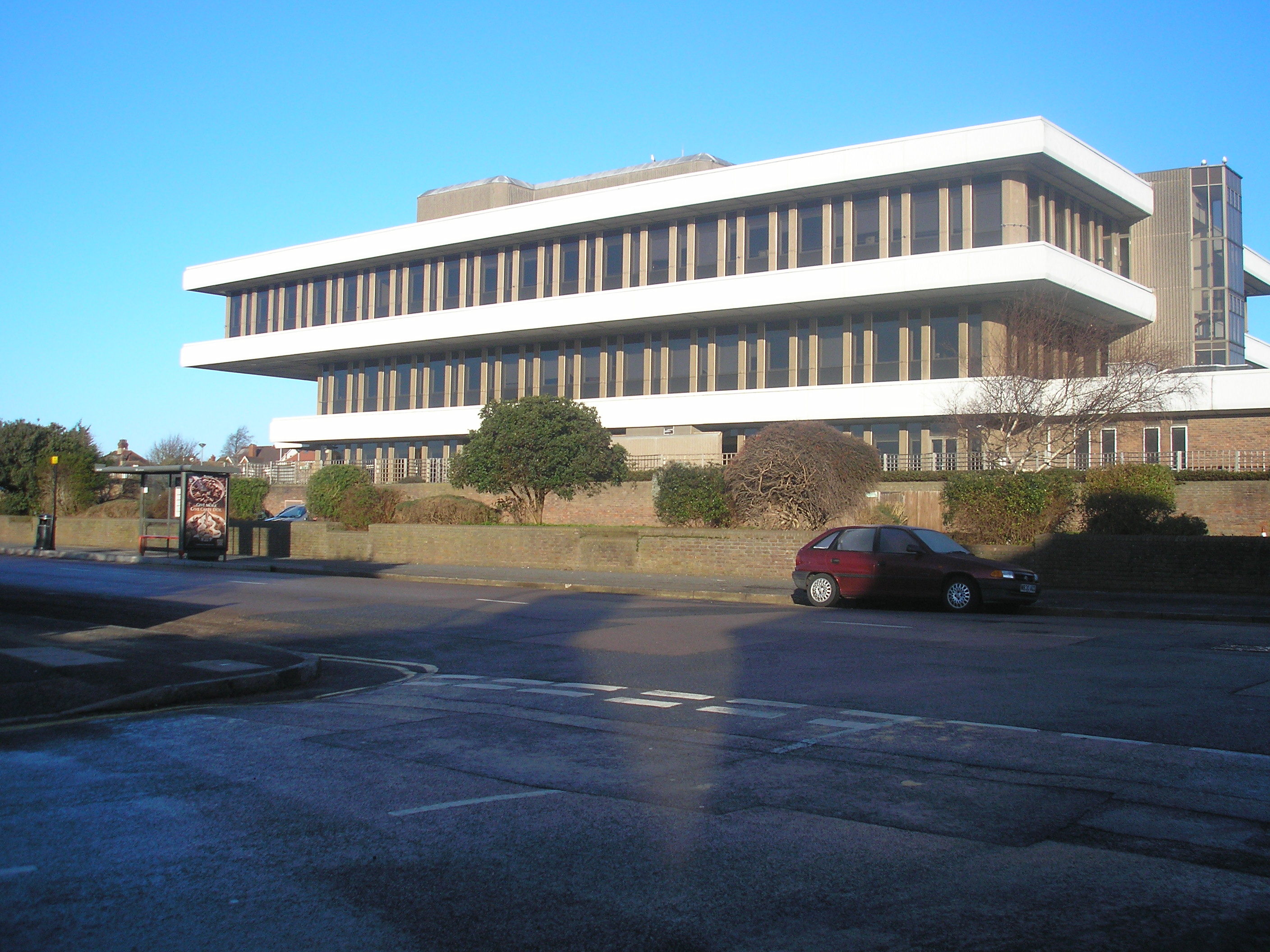
Production was gradually moved from Portland Road and many other sites in the Brighton area to Hollingbury. This move was completed in 1973 with the closure of the Portland Road site. CVA had operated from the site for 56 years, however the new building had lasted barely 20 years! The Portland Road site was redeveloped in the 1970’s, with the houses on either side being demolished to give additional frontage, and is now occupied by Seeboard Energy.


Comments about this page
Thanks Peter for another informative article on the history of CVA. The photos brought back memories of 1971 when I attended the technical college in School Road Hove. On Thursdays my fellow apprentices and I used to walk to the Portland Road offices to collect our wages from Mr Geoff Paine, who was the Training Officer for Kearney & Trecker. The pay for a 16 year old first year apprentice in 1971 was £8.20p a week. After giving my mum £2.00 keep; I still had over £6.00 to spend on myself; life was so simple when you were young and naïve.
Very interesting article. My father John Wood, worked for CVA initially and I think mostly at Portland Road, but also at Coombe Road, where he met my mother Maureen Weeden and latterly at Hollingbury from 1946- 1972. In fact he received his 25 year watch in 1971 and was made redundant the following year, when I assume they did away with pattern shop. He served his apprenticeship at Portland Road in the patternshop, which was close to his home on the Knoll estate. From what he has told me and continues to tell me it seemed an enjoyable place to work. He mentioned lots of names, some of whom may not be with us any longer including Mike Dean, Micky Horrobin, Cecil(Sissle?) the patternshop foreman, “Bumble” who was badly wounded during the war and others whose names I can’t recall. If any of them or perhaps their more IT aware children or Grandchildren have their own memories, they could share them on this site. Similarly anyone who was brought up on the Knoll Estate in the 30s, 40s and 50s Hope to hear Philip Wood
I was an apprentice here from 1956 to 1959 when I was transferred to Crowhurst Road following an altercation with the foreman of the heat treatment shop, which was like the black hole of Calcutta. The two windows above the two cars was, I believe the apprentice school (if not, it is the two windows to the right) which was run by John Adfield and Fred?. I was there for the first six months of 1956. The only fellow apprentice I can remember is Graham Attwater. Happy memories (except for the heat treatment shop)!!
I came across this site today by pure chance. I served my time as a toolmaker at c.v.a in the mid 50s,first in St.James St. and then moved to Hollingbury. After moving through the m/c shop and D.O. I ended up on the bench in the Presstool dept. under Jack Cook. Soon after completing my “Time” I emigrated to South Africa. In 63′ I moved to California and ended up designing and building precision tooling in Silicon Valley. I know now my apprenticeship at c.v.a. was first class and that there were some very highly talented people employed there. I am now long retired and live in S.Ireland. My father George Solly was in management at No2 and No6 for many years. His brother Frank Solly was a highly skilled miller when I was there. The finest engineers I worked with in my travels were mostly Germans, but very close behind were some of the people that worked at c.v.a. Jigs Moulds & Tools.
Hi Peter, I expect you have a photo of your father when he received his MBE at Buckingham Palace? If not let me know your email address and I will send you one!
My dad and uncle worked at the C.V.A in Portland Road, before the name changed. They both worked in the part which was called the ‘harding shop’. Dad worked nights and my uncle worked the day shift. I wonder if any one remembers them? Charlie Newman who was my dad, Ernie standing who was my uncle. Not sure how long they worked there for, but I remember going to Christmas parties as a kid at the factory in Hollingbury. My dad also worked at the Hollingbury factory.
That’s the “hardening” shop Kathleen. Probably even then there were only a few places in Sussex with the capability to carry out hardening of steel, now there are probably none. Steel that had the correct amount of carbon, about 0.3% to 1.5% when heated to a “cherry red” and dipped (quenched) in water or oil, became hard. Of course it’s a lot more complicated than I have described, to get the desired hardness, which varied according to the amount of carbon, and the speed at which it was quenched. CVA also had the capability to carburize steel which had very low carbon content; that is to induce carbon into the skin of the steel, then heat and quench, giving a hard skin, but soft inside.
My father worked at CVA and KTM from 1953 to 1981 as a time clerk. He started out in Upper St James’s Street. Does anyone know where the CVA premises were in Upper St James’s Street?
Hi Philip, you can find info about the CVA premises in Upper St James’s Street here http://www.mybrightonandhove.org.uk/page_id__9559.aspx
Hi Philip, I lived in the area in the early 60s; I do remember the disused factory in the area of what’s now Hampshire Court. There used to be an archway roughly in line with Charlotte St on Upper St James St which I believe used to be the entrance to the factory. I seem to remember being told by an ex employee that one of the corner buildings of Charlotte St was used as an administrative office for CVA. Peter Groves has a wealth of knowledge on CVA / K&T / KTM / FMT factories, he may well comment with more information or try the search facility at the top of the page for more topics on CVA / Kearney & Trecker.
Thanks for that Mick, and you are correct about the office on the adjacent corner. I have a plan of the factory c.1946 hand drawn by Keith Merrington, I’ll try and put it on the site soon. Its a shame that they aren’t any/many photos of the factory, unless someone knows differently?
My father, Eric James Glover, also worked at C.V.A. Portland Road as a machinist but left to be a mechanic in the RAF at the outbreak of WW2 and on his war record shows his ‘boss’ to be Mr Brookes.
Hi Phillip, I’ve just seen your comments on CVA and the “Pattern Shop”. l also was an apprentice as a pattern maker, wasn’t much good by all accounts (so the foreman said -miserable git called Cecil). l knew your father John and we all used to have lunch together in a café called “Paul’s” by the station. After we had eaten we would go for a walk before going back to work. Billy Watts, Joe Holder, Dennis Pollard, Pete Rasen, Johnny Rattue(dead) Ron Blair (another misery- his mate was the foreman, Johnny Allen(deaf and dumb), Jack the carpenter, David Halgarhard, Jack Coney and a few more. Phillip l always remember your dad because he had massive calf muscles and l introduced him to Mr.George Harbour who was the main man to do with the self build scheme of houses and he lived up Hollingbury where l came from. I have just thought of another Ronnie Hill and Brian Yeandle. Hope your dad is well and say hello from me.
When my Dad (Bob Hazelgrove) came out of the RAF in 1953 he managed to get a job at CVA Portland Road. Before the War he was a Carpenter, he worked on the King Alfred when it was built. He obviously took any job that was offered. As for the first few years he was I think, a general labourer and thenhad a spell shot blasting, which was filthy sweaty work in those days. He then got the carpentry job he wanted. As far as I am aware he was a carpenter attached to the patten makers Shop, but not a pattern maker. He remained there till about 1968 or so and then he was moved about, to Hove, Hollingbury and Coombe Road. He was made redundant in about 1970, and went back to the building trade till he died in 1972. With regard to what they did in the lunch hour, he would get on his bike and ride up through the cemetery to Poynings Drive, West Blatchington where my Mum would have a hot dinner waiting for him. He would then ride back down again. He must have loved her cooking. I remember him complaining that there was often a copper waiting for him at the cemetery, who would tell him it was against the law to ride your bike through the cemetery, my Dad disagreed. I’m on my Dad’s side.
Nice to hear about the pattern shop Richard, it’s just amazing the wide range of skills at CVA. Shot blasting, once widespread in the England following the Industrial Revolution, is probably mostly unheard of now. I have some photos of the foundry and shot blasting, I hope to add to the site, perhaps your dad could be in one.
Hi Richard I was a pattern maker at CVA but l left after my apprenticeship but l remember your father well. He worked in the Pattern Repair shop which was attached to the foundry and he worked with two miserable blokes who were pattern makers, one of them was the foreman’s brother, his name was Jack, and l think the other was called Martin. Me being the dogsbody had to go in the foundry with my tools and try to sort out any problems with the wooden patterns which the foundrymen had abused and Bob (your dad) would come and help me which was always a pleasure as he was very helpful and a pleasure to work with. Those days are long gone now and good riddance as working in that foundry was a nightmare especially when they were casting as the heat and smell of a cupola furnace is awful. He was a nice man, Richard, and a joy to work with.
Hi Gerry. Should come on here more often. Saw your post some of the names you mentioned I have heard my dad mention. Brian Yendall I have met several times, he unfortunately had a stroke a few years ago.
I laughed about the remark about Dad’s calf muscles, it was a family joke, lucky I don’t have them, but my sister does. I will mention your name to dad. He is relatively well for his age 82, but struggling to look after Mum who has Parkinsons. Email if you want woodphilip119@gmail.com.
I was an apprentice pattern maker at Portland Road in 1969. My uncle is John Allen. I also worked with Jonny Woods. I finished my apprenticeship there, then I was made redundant.
Hi Tony Allen, I don’t know whether you meant to email me. but you did. I have emailed you back. The email took a month to get to me.
Hi Peter. I joined CVA in 1948 after my service in the Royal Signals. Jobs were hard to come by and I had to take a job as a jig borer on nights for 2 years. I had nearly 40 years with CVA, firstly associated with No 2 Factory at Kemp Town and then at Hollingbury. I have too many memories to put down here but can answer some of your questions and fill in a few gaps that you have, especially in the activities at both sites. I suggest that we meet with a sound recorder and have a long chat. Do not leave it too long as I am now 90! Give me a ring on 01273 883678.
When CVA was in Portland Hove were there any deaths there?
Does anyone remember my late Grandfather, Ben Bowman, who worked for CVA at Portland Road and in Hollingbury. He was a keen sea angler and was secretary of the beach fishing club for many years?
Yes I remember him well, he worked in the gear cutting section. Quite a complicated process, some gears can be very complex ie with helix angles etc, I doubt there are many (if any) places in Sussex that could produce them now! I worked under him for a while at Hollingbury when I was an apprentice, and remember his fishing stories.
Hi, I’m researching the life of my father Ted Allison, who worked for CVA / Kearney & Trecker from at least 1939 until retirement (mid 1980s, or was it earlier?). Most of that time was at Portland Road. Although I am especially interested in the 1930s/40s, any information would be appreciated. Because of the very specific nature of this search, it is probably best if replies are emailed to me at ieallison@btinternet.com Thanks in anticipation, Ian Allison
Hi does anyone remember a 1954 Thames van or pickup owned by CVA MOULDS?
Thanks, Steve.
Ssplant@hotmIl.co.uk
Add a comment about this page